
Oil prices remain high amid the ongoing war in the Middle East, following a volatile week with some bearishness from US crude stocks growing for a fifth week and US-Iran talks appearing to gather pace
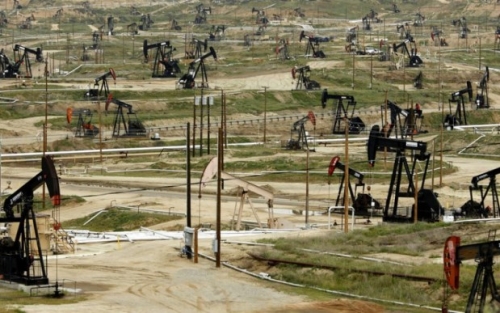
BKR Rig Count | The total active drilling rigs in the United States decreased by 9 last week to 543. Oil rigs decreased by 5 to 409, and gas rigs decreased by 4 to 127. Rig count in the Permian Basin decreased by 2 to 241 | Mar 27 | BKR NAM Rig Count
US Crude Inventories, excluding those in the Strategic Petroleum Reserve (SPR), increased by 6.9 MMbbl to 456.2 MMbbl (about 0.1% above the 5y average for this time of year). On the products side, gasoline decreased by 2.6 MMbbl (3% above the 5y average). Distillate fuels increased by 3.0 MMbbl (0.4% below the 5y average). Total commercial petroleum inventories increased by 8.3 MMbbl | Mar 20 | EIA Weekly Report
Market Comments
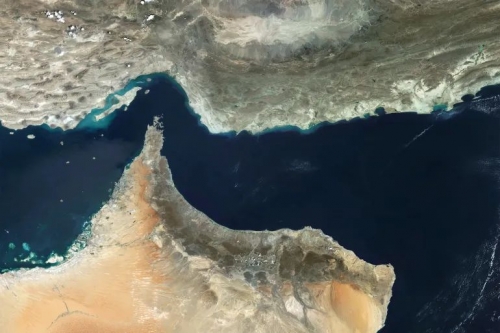
Iran Conflict, Diplomacy & Escalation President Trump extended his pause on US strikes against Iranian energy infrastructure to April 6 — his second extension — as negotiations remain fragile. Iran rejected a US 15-point framework, demanding war reparations and recognition of its Hormuz authority, while the Pentagon weighs 10,000 additional troop deployments. Iran allowed 10 tankers through as a goodwill gesture and declared "non-hostile" vessels may transit freely under conditions. Bahrain pushed a UN Security Council resolution authorizing force to protect Hormuz shipping, likely to face a Russian and Chinese veto. With 4,500 killed, Saudi Arabia and the UAE are weighing direct entry | Mar 24-26 | Bloomberg, Upstream, Upstream
Gulf Supply Under Pressure Saudi Arabia has ramped Yanbu exports to 4.4 million bpd via its East-West pipeline, still roughly 2 million bpd below pre-war levels, with 56 million barrels stranded in the Gulf. Qatar's entire 77 million tonne-per-year LNG capacity remains offline — two trains may take five years to repair — and all offshore contracting is suspended. Adnoc is running Das Island LNG at minimal levels after Iranian strikes on multiple UAE facilities, though Habshan has restarted. Iran's strike on South Pars severed gas exports to Turkey, which entered the disruption with storage at full capacity | Mar 25-27 | Bloomberg, Upstream, Bloomberg, Bloomberg
Ukraine Targets Russian Export Arteries Ukraine struck Russia's two main Baltic crude export terminals in quick succession. Drones hit Primorsk — Russia's largest crude facility — damaging tanks and loading equipment, while Gazprom accused Kyiv of targeting pipelines carrying 130 million cubic meters per day to Turkey and Eastern Europe. Days later, Novatek's Ust-Luga condensate terminal was hit, suspending loadings. The two ports handle 45% of Russia's seaborne crude exports, costing an estimated $150 million per day in lost revenue. Russia is rerouting flows through ESPO to Kozmino, Kazakhstan, and Black Sea terminals | Mar 23-27 | Upstream, Upstream, Bloomberg
EPA chief Lee Zeldin said the US must strengthen partnerships with Asia-Pacific nations seeking new energy supplies after disruptions caused by the war with Iran. Asian allies at a Tokyo forum highlighted the need to diversify oil and LNG supply chains, with Japan wanting faster US shipments. Zeldin urged ramping up US infrastructure, issued temporary ethanol waivers, and said EPA is working with hyperscalers to accelerate data‑centre permitting | Mar 25 | Upstream
Oil & Gas update
North America
Equinor is looking to expand its US shale gas business, primarily around the Marcellus, seeking acquisitions that would extend the longevity of its existing portfolio. Norway's biggest oil and gas producer aims to boost non-Norway production to 900,000 barrels of oil equivalent per day by 2030 from about 700,000 last year. The US remains Equinor's largest development region outside Norway; it holds non-operating positions in the Gulf of Mexico and Appalachia | Mar 25 | Bloomberg
Wastewater disposal in the Permian Basin is facing growing regulatory scrutiny, with shallow reservoir capacity becoming constrained, executives said at CERAWeek. Operators inject nearly 20 million bpd of produced water underground, according to Devon Energy, but seismic risks from deep disposal have pushed a shift to shallower zones. With these now filling up, tighter oversight threatens oil output, as producers depend on water disposal to maintain production | Mar 25 | Upstream
Occidental CEO Vicki Hollub sees US oil production peaking at 15 mbpd between 2027 and 2031. Hollub and other oil executives spoke at CERAWeek stressed the need to accelerate exploration and to increasing output in mature basins while also shortening timelines from discovery to production. Equinor highlighted rapid development cycles, while SLB’s Olivier Le Peuch emphasised technology and generative AI and Occidental cited CO₂‑EOR pilots | Mar 24 | Upstream
TotalEnergies and the US government agreed to redirect nearly $1 billion initially earmarked for offshore wind toward domestic oil and gas projects. TotalEnergies will return two 2022 offshore wind leases, recovering $928 million to reinvest in LNG, gas, and gas-to-power projects, including Train 4 at Rio Grande LNG and Alaska LNG offtake. CEO Patrick Pouyanne called it a smarter investment, while US Secretary of the Interior Doug Burgum said the move supports affordable, reliable, and secure energy | Mar 23 | Upstream
Global oil and gas exploration has shifted from a spending game to an operational and efficiency focus, with timelines now emphasised from exploration to first oil or gas, executives said at the CERAWeek. Operators like TotalEnergies, ExxonMobil, and Eni prioritise deepwater and frontier hubs, often partnering with national oil companies. It was noted that exploration increasingly runs in parallel with development, some highlighted the use of AI for seismic imaging and autonomous drilling, while others emphasised human expertise remaining a critical component | Mar 25 | Upstream
Latin America
Petrobras discovered high‑quality oil in pre‑salt reservoirs at the Marlim Sul field in the Campos basin, supporting ongoing revitalisation efforts. The find, identified based on " wireline logs, hydrocarbon shows, gas indications and fluid sampling" will undergo further lab analysis to assess reservoir potential. Petrobras gave limited detail and did not disclose well size, consistent with recent smaller discoveries. The company is replenishing reserves in mature Campos assets and operates Marlim Sul with 100% ownership | Mar 26 | Upstream
Staatsolie has engaged ILACO Suriname to conduct an Environmental Impact Assessment (EIA) over 41,600 sq km in Suriname's shallow-water region to identify target areas for the next phase of the company’s Suriname Southern Shallow Water multi-client 3D seismic project. This region extends from the coastline to the northern boundary of several licensed offshore blocks, including TotalEnergies' Blocks 6 and 8, Petronas' Block 9 and Chevron's Block 10 | Mar 25 | S&P Global
Opposition leader and Nobel laureate Maria Corina Machado told CERAWeek she plans full privatisation of Venezuela’s oil and gas sector, including PDVSA, if her party prevails in “free and fair” elections. Her plan features flexible and long‑term renewable 25-yr contracts, capped royalties at 20%, private ownership of reserves, along with a production target of at least 5 mbpd of oil which she estimates would require $150 billion over 10 years to reach 5 million bpd | Mar 25 | Upstream
Equinor started development drilling at the $9 billion Raia project in the Campos basin, expected onstream in 2028, and includes six wells ~200 km offshore, WD 2900m. The project features a large FPSO with capacity of 125,800 bpd of condensate and 16 MMcm/d of natural gas (~15% of Brazil's natural gas demand), and a 200‑km gas pipeline to Cabiunas. The field is estimated to hold over 1 billion boe in recoverable reserves. Equinor 35%, Repsol Sinopec (35%), Petrobras (30%) | Mar 24 | Upstream
Brazilian independent Prio has started production at the Wahoo pre-salt field in the Campos basin, with the first well stabilising at 12,000 bpd, above the expected 10,000 bpd. Four oil wells and two water injection wells are tied to the Valente FPSO via a 35 km subsea link. Wahoo is expected to reach 40,000 bpd by end-April. Prio also received a drilling licence from Ibama for up to 14 new wells at Frade | Mar 23 | Upstream
Europe and Africa
London-listed junior Europa Oil & Gas secured a licence extension for FEL 4/19 offshore Ireland to January 2028, allowing further technical studies and time to secure a partner to advance development. The block hosts the 1.5 Tcf Inishkea West gas prospect, a low-risk asset that could potentially provide a reliable source of lower-emission domestic energy and reduce Ireland’s reliance on imported gas, given its proximity to existing infrastructure | Mar 27 | Upstream
Serica Energy completed acquisition of 40% operated stake in the Greater Laggan Area from TotalEnergies, adding a West of Shetland hub (~5,000 boepd) with growth options via Glendronach tie-back, Tormore infill potential, and four exploration licences. Output fell ~20% to 27,600 boepd last year due to Triton FPSO downtime but has rebounded above 50,000 boepd since early March, with potential to exceed 65,000 boepd by end-2026 | Mar 26 | Upstream
EnQuest plans transformational growth in the UK North Sea and Southeast Asia after boosting production 5.4% in 2025 to 42,945 boeped. Southeast Asian volumes rose 13% with early first gas at Seligi 1b, while UK output dipped due to a Magnus outage. The company targets 41,000–45,000 boepd in 2026, expanded drilling and interventions, and continues pursuing acquisitions after a failed Serica bid. Capex will total ~$160 million this year, — including the Magnus infill drilling campaign — while Opex will hit ~$450 million | Mar 25 | Upstream
Equinor will further develop the gas accumulation of Tyrihans North field, Norway, with a new subsea template and two production wells to start up in 2028, tied back to the Kristin platform via Tyrihans. FID on the $365 million project is expected in Q4 2026 and production should last around seven years. Partners TotalEnergies, Petoro and Var Energi | Mar 24 | S&P Global
Afentra (op) aims to take FID in Q4 2026 for its GPQ development in Block 3/24 (Golungo, Palanca North East and Quissama discoveries in shallow waters of the Lower Congo Basin, Angola). The operator has indicated that well re-entry and development optimization studies support a phased approach to accelerate first oil, with re-entry planning scheduled for late 2026 through H1 2027 and the execution phase to proceed past 2027. | Mar 24 | S&P Global
Norwegian gas imports, supplying ~75% of UK demand, are at risk as North Sea production declines and shared infrastructure faces closure, Offshore Energies UK (OEUK) warned. Licensing and fiscal barriers have reduced domestic output with the UK forecast to rely on imported LNG for more than 25% of its gas supply by 2030 and 50% by 2035, up from ~14% last year, OEUK said. OEUK urges scrapping the Energy Profits Levy and supporting new exploration, which could boost domestic gas production by 5% in a year and add 80% by 2030, strengthening energy security | Mar 24 | Upstream
Greece’s energy minister said the EU is on track to eliminate Russian natural gas imports by end-2027, replacing them with US LNG and East Mediterranean resources. Europe has rapidly expanded regasification and pipeline infrastructure since Russia’s 2022 invasion of Ukraine. New licences were awarded in Greece to Chevron and local partner Helleniq Energy, while smoothing the way for exploration by ExxonMobil and Energean. The minister said that “the energy map in Europe has been fundamentally redrawn” | Mar 23 | Upstream
Eni prioritises large exploration licences, farming out early while retaining operatorship, and accelerating time to market by using nearby facilities. CEO Claudio Descalzi said Eni has cut project timelines to 3.5–4 years versus a seven-year industry average. The dual exploration model de-risks 100% of an exploration licence, farms out 40–50% early on while staying an operator - that allowed them to generate $13 billion in cash, he added. Having averaged a 75–80% exploration success rate in the last decade, and doubling down on high-risk pre-salt and stratigraphic prospects, Eni plans 850,000 boe/d new production | Mar 24 | Upstream
Middle East and North Africa
Apache strikes gas at South Kalabsha 1 in the Western Desert, onshore Northern Egypt Basin Preliminary tests yielded 26 MMcfg/d and 2,700 b/d of condensate | Mar 27 | S&P Global
Asia
Prime Energy's Camago-3 well offshore Palawan flowed at up to 60 million cubic feet per day, effectively doubling recoverable gas from the Malampaya field's remaining reserves. The discovery is approximately 2.5 times larger than January's Malampaya East-1 find (98 billion cubic feet), suggesting about 250 billion cubic feet of recoverable gas. Prime is on track to deliver first gas from the Malampaya 4 project by Q4 2026, using Noble's drillship at $499,000 per day | Mar 29 | Upstream
Increased output from the Tengiz oilfield helped boost 2025 earnings at KazMunayGaz, with revenues rising 13% to $18 billion. Production jumped 40% to over 850,000 bpd following a $47 billion capacity upgrade, while higher throughput from the Caspian Pipeline Consortium transported more than 90% of Tengiz’ oil to European and international markets. Flatlining production from KazMunayGaz’ own operated fields partially offset gains, but adjusted output including Tengiz and Karachaganak remained slightly higher than 2024 | Mar 26 | Upstream
Kazakhstan has decided to build a gas processing plant at the Karachaganak gas-condensate field (onshore Pre-Caspian Basin, northwest Kazakhstan) outside the existing PSA. State-owned KazMunayGas (KMG) is set to take over the project, with Chinese contractors CITIC Construction selected to deliver it. The plant is designed to process up to 4 Bcm/y (386 MMcf/d) of gas, targeting completion in 2028 | Mar 26 | S&P Global
Japan’s Inpex has entered a farm-in agreement with Daly Waters Energy to acquire equity in shale gas plays in Australia’s Beetaloo basin, one of the world’s largest, with over 500 Tcf of discovered and prospective gas resources and potential production of 6000 TJ/day (~5.6 Bcf). Inpex will take 11.25% in FSDA North and South and 20% in Beetaloo Central, with an option to increase to 43.75%. The investment supports domestic gas supply and Ichthys LNG backfill | Mar 25 | Upstream
ExxonMobil has started drilling for the Turrum Phase 3 project offshore Australia to supply the east coast gas market before southern hemisphere winter of 2027, "delivering more gas than any single Gippsland Basin Joint Venture development since West Barracouta" ExxonMobil said. The five-well campaign at the Marlin B platform, 42 km offshore Gippsland, is part of a 50:50 joint venture with Woodside, alongside a A$200 million Kipper 1B expansion, both critical to replenishing the declining Bass Strait reserves | Mar 24 | Upstream
CNPC has been approved by the Turkmenistan’s President to secure a contract from Turkmengaz (op) to design and build a gas processing facility for the Phase 4 development of the Galkynysh (Yoloten) gas field, with a capacity of 10 Bcm/y (967 MMcf/d) of gas. The company will also drill and complete the wells for the new phase | Mar 23 | S&P Global
Looking ahead
Iran Conflict, Damage & Restart Timelines More than 40 energy assets across nine countries have sustained severe damage, with restart timelines ranging from two to five weeks for oil fields depending on size, and up to five years for Qatar's Ras Laffan LNG facility due to supply chain constraints — particularly for large-frame gas turbines with two-to-four year backlogs. Rystad estimates total repair costs at a minimum of $25 billion, dominated by engineering and construction work. | Mar 25 | Upstream, Bloomberg
Supply Balances Nearly four weeks into the closure, pre-existing buffers — a 3 million bpd expected surplus, ample inventories, and roughly 5.3 million bpd of spare capacity — are exhausted, with all remaining OPEC spare capacity sitting inside the Strait and inaccessible. Peak production losses have reached 10 million bpd, exceeding Covid-19 troughs. Energy Aspects estimates 930 million barrels of Middle Eastern crude and condensate will be lost this year, with shut-ins averaging 8.3 million bpd in March widening to 10.9 million in April. SPR releases are tempering the impact, but commercial inventories remain structurally tighter through end-2027 | Mar 25 | Rystad, Energy Aspects
Price Scenarios & Supply Response BloombergNEF frames its outlook around three Hormuz reopening scenarios — mid-April, mid-May, or mid-June — with a June closure potentially pushing Brent above $150 per barrel; each additional month cuts global supply by 11 million bpd versus baseline. Goldman Sachs raised its 2026 Brent forecast to $85, modeling Hormuz flows at 5% of normal for six weeks with peak production losses of 17 million bpd. IEA's Fatih Birol called the disruption equivalent to the 1970s oil crises and 2022 gas crisis combined. Elevated forward prices have already shifted Citigroup's US shale outlook from stagnation to potential additions of 815,000 bpd through 2028 | Mar 25-27 | Bloomberg, Bloomberg, Bloomberg
Hormuz Recovery Logistics Even after fighting ends, restoring normal Hormuz transit will be a significant undertaking. Iranian mines would need to be cleared from shipping lanes before escorts could begin — a process estimated at around two weeks. The US would likely deploy Arleigh Burke-class destroyers with Aegis systems, but proximity to the Iranian coastline limits missile intercept windows. The Navy lacks sufficient ships to protect the roughly 140 vessels transiting daily, making a multinational coalition essential. Managing the restart of traffic will likely require pre-announced convoy slots and mandatory pilotage for the initial period. | Mar 25-27 | Bloomberg, Bloomberg