
Oil benchmarks hit four-year highs this week as the war choked off Hormuz transit flows. The IEA launched its largest-ever collective reserve release (400 MMbbl), while the US issued Jones Act and Russian oil import waivers. Asian nations implemented emergency consumption measures.
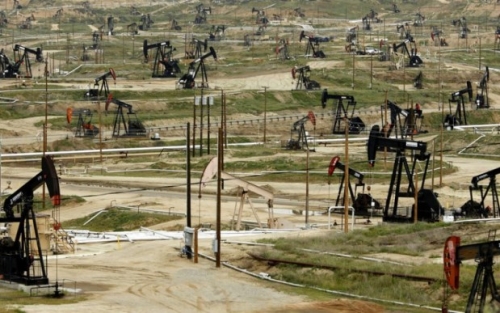
BKR Rig Count | The total active drilling rigs in the United States decreased by 1 last week to 552. Oil rigs increased by 2 to 414, and gas rigs decreased by 2 to 131. Rig count in the Permian Basin increased by 2 to 243 | Mar 20 | BKR NAM Rig Count
US Crude Inventories, excluding those in the Strategic Petroleum Reserve (SPR), increased by 6.2 MMbbl to 449.3 MMbbl (about 1% below the 5y average for this time of year). On the products side, gasoline decreased by 5.4 MMbbl (3% above the 5y average). Distillate fuels decreased by 2.5 MMbbl (3% below the 5y average). Total commercial petroleum inventories increased by 0.4 MMbbl | Mar 13 | EIA Weekly Report
Across the broader Gulf, Iranian drone and missile strikes caused facility shutdowns. In the UAE, ADNOC’s Habshan gas facility (over 6.1 Bcf/d processing capacity) and Bab oilfield (250,000+ bpd) were forced offline; the Shah sour gas field (1.45 Bcf/d, operated by ADNOC Sour Gas in a 60/40 JV with Occidental) was shut following a drone strike; and a separate strike suspended crude loadings at Fujairah port, which ADNOC uses to bypass the Strait of Hormuz. In Kuwait, the Mina Al-Ahmadi refinery (346,000 bpd) suffered drone strikes, causing fires and unit shutdowns. Kpler estimated total Middle East production outages at around 9 mbpd, while WoodMac estimated approx. 2.5 mbpd of refining capacity disrupted across Ruwais, Ras Tanura, Samref, Sitra, and Mina Abdullah facilities | Mar 17–20 | Upstream, S&P Global, S&P Global, Upstream
Multiple sections of Iran's South Pars gas field had been struck, which, along with the extended North Field on the Qatari side of the Persian Gulf, is by far the world's largest non-associated natural gas field. Prime Minister Netanyahu later confirmed Israel acted without informing the US; Trump subsequently ordered a halt to further strikes on facilities there. Iran retaliated with missile attacks on Qatar's Ras Laffan LNG facilities, Saudi Arabia's Samref refinery, and Israel's Haifa refinery. Risk analysts warned the move signals the war will likely extend into May | Mar 18–19 | Upstream, Upstream
QatarEnergy CEO Saad al-Kaabi said repairs from attacks on Qatar’s LNG facilities will take 3–5 years, sidelining ~12.8 Mtpa and costing ~$20 bn in annual revenue, with force majeure possible on long-term contracts for up to five years. A second wave of strikes on March 19 caused further damage at the Shell-operated Pearl GTL plant, the world’s largest gas-to-liquids facility, which processes ~1.6 Bcf/d of gas and converts it into ~140,000 bpd of petroleum products. WoodMac estimated that, at current rates, each month of disruption removes 1.5% of annual global LNG supply, while delays to North Field expansion could “push tightness into 2027 and beyond | Mar 18–20 | Upstream, Bloomberg, Bloomberg
President Trump issued a 48-hour ultimatum to resume traffic in the Strait of Hormuz, now in its fourth week of closure, while warning of potential strikes on Iran’s power plants. Iran, in turn, warned it could target US and Israeli infrastructure in the region. The closure is limiting supplies of oil, gas and fuels and raising prices for Asia’s oil-importing nations, pushing them to seek alternative supplies or engage with Tehran | Mar 22 | Bloomberg
Saudi Arabia has rolled out a contingency plan to sustain oil flows, relying on a 1,200-km pipeline, built in the 1980s, from its oil fields to the Red Sea port of Yanbu, where tankers are gathering to load Saudi crude. This route offers a vital release valve to the pressure building on global oil supplies, with Yanbu crude exports hitting a five-day rolling average of 3.66 million barrels , around half of Saudi Arabia's prewar levels | Mar 22 | Bloomberg
Iraq is negotiating with Iran for tanker passage through Hormuz, having cut its own production to 1.2 million bpd from 4.3 million bpd, and is exploring restarting the long-idle Kirkuk-Ceyhan pipeline to Turkey (up to 450,000 bpd) to bypass Gulf disruptions. India and Pakistan have separately secured limited tanker passage. Iraq’s Oil Ministry said a restart could help offset lost revenue from the closure at current elevated prices | Mar 17 | Upstream
The US plans to release about 45 million barrels from the US SPR soon in the first phase of a planned distribution of inventories aimed at keeping fuel prices in check. The Trump administration said last week that the SPR will make a total emergency release of 172 million barrels as part of a relief plan coordinated by the IEA | Mar 20 | Bloomberg
The US Department of the Treasury issued a temporary license allowing the sale of Iranian oil and petrochemicals loaded before 12:01 am Friday (New York time) through April 19 to temporarily boost supply and counter rising prices. Treasury Secretary Scott Bessent described it as a “narrowly tailored, short-term” measure to release around 140 million barrels currently stranded at sea | Mar 20 | Bloomberg
The Federal Reserve left interest rates unchanged and continued to project one rate cut this year, raising its 2026 inflation outlook to 2.7%. Governor Waller noted that the longer oil prices remain elevated, the greater the risk of upward pressure on inflation | Mar 20 | Bloomberg
US officials say the White House is sending hundreds of Marines to the Middle East as it weighs a plan to seize Iran's Kharg Island oil export hub | Mar 20 | Bloomberg
The UK, France, Germany, Italy, the Netherlands, and Japan issued a joint statement expressing readiness to help escort ships through the Strait of Hormuz. The coalition condemned attacks on regional energy infrastructure and called for a moratorium on strikes on civilian facilities | Mar 19 | Upstream
Looking ahead
Macro oils short-term mid-March 2026 price update | Woodmac extended their Strait of Hormuz closure assumption from four weeks to a total six-week disruption, with reopening now expected in mid-April rather than mid-March. Subsequently, Brent price forecast is raised to $115/bbl for April, reflecting prices rising through mid-month to highs of around US$130/bbl, before falling sharply post the Strait reopening. May is revised up US$11/bbl to US$80/bbl and June up US$4/bbl to US$72/bbl. The sharp April peak captures maximum supply disruption before flows resume in earnest. While Gulf infrastructure attacks are triggering force majeure and widespread outages, Iran’s output remains broadly intact. Gulf oil exports have collapsed to 36% of pre-conflict levels: with nearly 9 mb/d of production shut in (~9% of global supply). Iraq and Kuwait are most severely impacted, 70% of Iraq’s production is offline. The Strait of Hormuz blockade has paralysed critical export routes: Gulf producers have been forced to rely on limited bypass options. Saudi Arabia is redirecting flows through the East–West pipeline to Yanbu on the Red Sea. The UAE's Fujairah terminal has come under repeated attacks. While loadings initially remained resilient and even surged to record levels, a strike on 16 March disrupted operations. Maritime operations face unprecedented risks: 15 tankers have been struck since the conflict began, over 100 vessels remain trapped in the Gulf carrying 126 million barrels, and Aramco’s Red Sea freight rates have surged to US$450,000/day – adding US$10-15/barrel to shipping costs. Storage capacity is reaching critical limits: as storage nears capacity and tanker availability tightens, producers without alternative export routes are increasingly forced into further shut-ins. Iraq, among the most exposed, has restarted fragile exports via Türkiye while exploring other workarounds including trucking crude to Syria and Jordan. Targeting is moving upstream, raising system vulnerability: attacks have largely focused on downstream infrastructure, but strikes on gas production facilities in recent days marks an escalation into upstream production, heightening the risk of cascading disruptions | Mar 19 | WoodMac
HFI Research: Oil And Gas Market Amidst The Prolonged Iran Conflict | 21 days into this conflict, the oil-on-water buffer is now depleted, according to HFI Research. Every day that goes by now, crude-on-water will drop ~11 mb/d. SPR release will start late next week, but the flow mismatch (2.5 mb/d vs 11 mb/d) will result in onshore storage to decline by ~290 million bbls in April. Total production shut-in is now ~10 mb/d. Iraq’s 4.3 mb/d is near zero, with Kuwait to follow. The UAE and Saudi Arabia will be able to maintain production for another week before further reducing it. By HFIR’s estimate, the middle of next week will see production shut-in reach ~12 mb/d. Many of the experts they speak with believe that the conflict will not be resolved in April. If that is true, the oil market will break by early April, and demand destruction levels can be seen as soon as the 2nd week of April, though some regions are already seeing demand destruction | Mar 20 | HFIR (via Bloomberg)